
Canada's Drone Industry Set to Become a $69 Billion Sector by 2045, NAV CANADA Report Reveals
A landmark study commissioned by Canada's air navigation authority projects a twentyfold increase in the economic contribution of drones and advanced air mobility over the next two decades.
DURMUS EFE KOCH
5/21/20262 min read
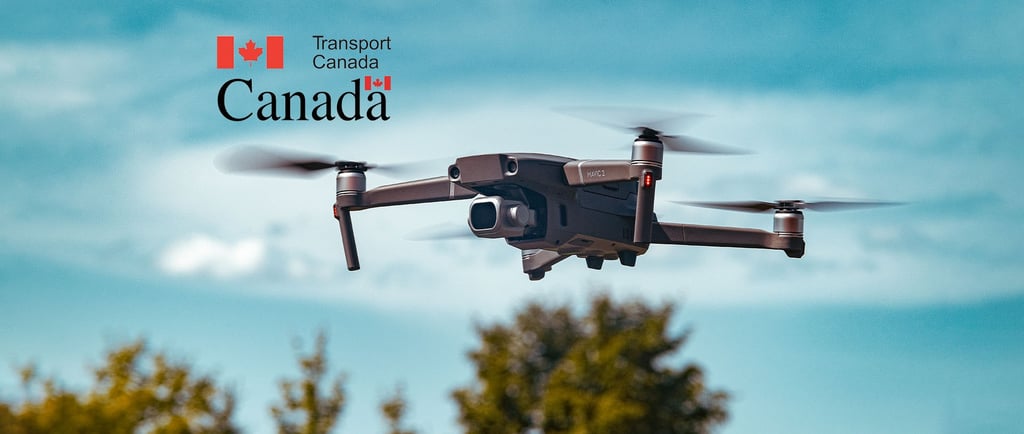
A new market study commissioned by NAV CANADA has projected that Canada's drone and advanced air mobility (AAM) sector could become one of the country's most significant economic growth engines over the next twenty years. The report, titled the RPAS and AAM Market Sizing and Economic Impact study, forecasts that annual drone flights in Canadian airspace will rise from approximately 300,000 in 2024 to more than 21 million by 2045 — an increase of roughly seventyfold.
Economic Impact: From $3 Billion to $69 Billion
According to the study, the RPAS and AAM sectors contributed between $2.4 billion and $3.6 billion CAD to Canada's GDP in 2024 and supported more than 30,000 jobs nationwide. By 2045, that contribution is forecast to grow more than twentyfold, reaching over $69 billion CAD annually and creating more than 290,000 jobs across fields including software engineering, maintenance, data analytics, and RPAS traffic management.
NAV CANADA President and CEO Mark Cooper described the findings as confirmation that Canada is entering a new era of aviation. The study anticipates that transportation and logistics will dominate drone activity by mid-century, accounting for 84% of all drone flights by 2045, compared with 45% for construction and infrastructure today.
What Will Canada's Skies Look Like in 2045?
The study outlines specific projections for drone use across sectors. In healthcare, 350,000 annual delivery flights are expected for medical goods including pathology samples, blood, organs, and prescription medicine. In public safety, around 15,000 RPAS units will assist with law enforcement, border surveillance, and emergency management. Consumer goods deliveries, including food, groceries, and e-commerce parcels are projected to total 4.9 million flights per year. Passenger transport via drone is also projected to reach 150,000 operations annually.
The Canadian RPAS and AAM fleet is expected to grow from approximately 24,200 aircraft in 2024 to more than 506,000 by 2045. The RPAS Traffic Management system is projected to handle roughly 19 million operations by that point equivalent to more than 50,000 flights per day.
Infrastructure and Regulatory Requirements
NAV CANADA acknowledges that enabling this scale of growth will require new digital and physical infrastructure, including vertiports, dedicated air corridors, and integrated traffic management systems capable of safely coordinating thousands of simultaneous flights in shared airspace. The organization has called for adaptive regulation and deep collaboration across industry and government to make this vision a reality.
References
NAV CANADA. (2026, April 15). NAV CANADA study projects drones will reshape Canada's low-level airspace, economy and daily life [Press release]. https://www.navcanada.ca/en/news/news-releases/nav-canada-study-projects-drones-will-reshape-canadas-low-level-airspace-economy-and-daily-life.aspx
Canadian Occupational Safety. (2026, April 19). Rise of the drones: Canada's economic blockbuster. https://www.thesafetymag.com/ca/news/general/rise-of-the-drones-canadas-economic-blockbuster/547442
Urban Air Mobility News. (2026). NAV CANADA study predicts twenty-fold growth in AAM and RPAS operations by 2045. https://www.urbanairmobilitynews.com/utm/nav-canada-study-predicts-twenty-fold-growth-in-aam-and-rpas-operations-by-2045/

