
NVIDIA and Carbon Robotics Are Using AI-Powered Lasers to Eliminate Weeds - and Potentially Herbicides - From Modern Farming
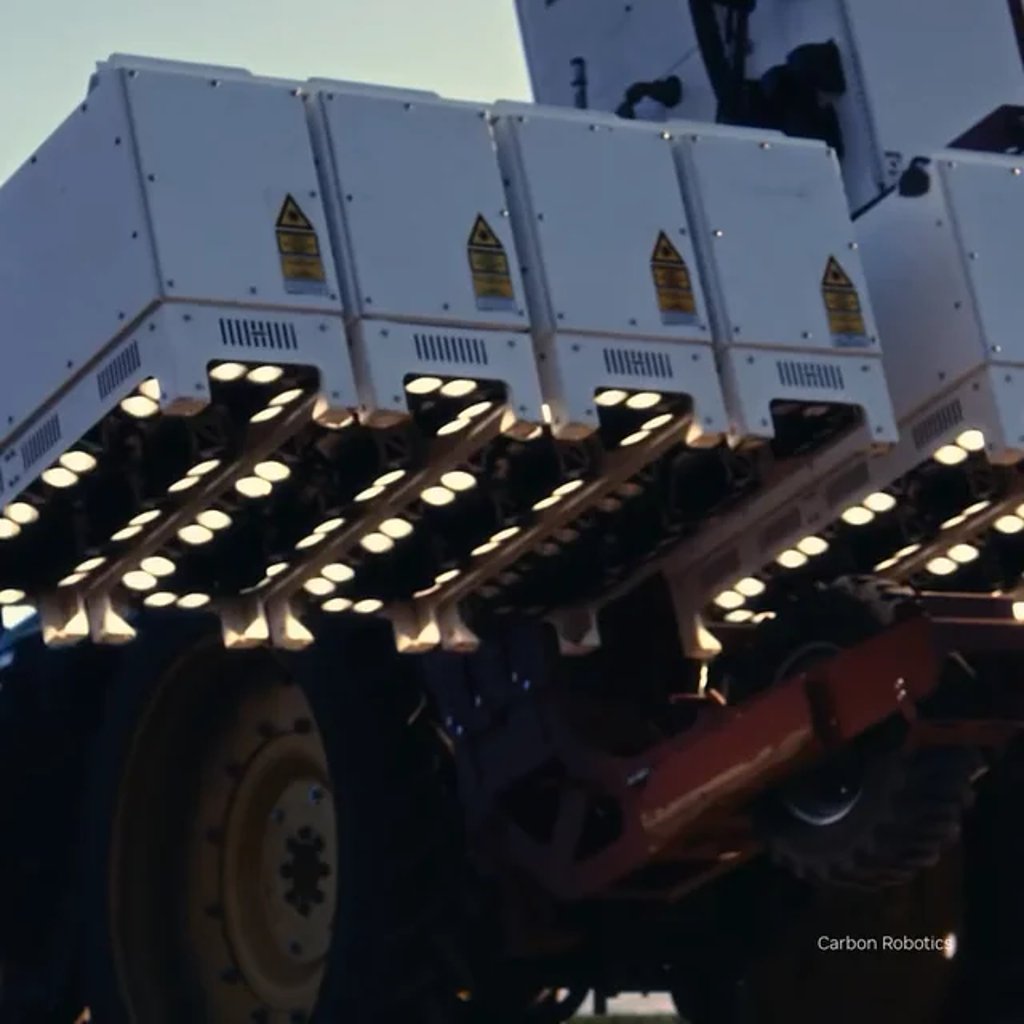
The LaserWeeder G2, powered by 24 NVIDIA GPUs, can identify and destroy up to 600,000 weeds per hour with sub-millimeter precision — without a single drop of herbicide.
DURMUS EFE KOCH
5/21/20262 min read
Autonomous Agriculture: NVIDIA, Edge AI, and the Death of Chemical Farming
The global food supply chain is undergoing its most profound structural shift in a century. NVIDIA’s venture capital arm, NVentures, has strategically finalized an investment in Seattle-based Carbon Robotics, accelerating the deployment of the LaserWeeder G2. This is not merely an agricultural equipment upgrade; it is a definitive move to replace the toxic legacy of chemical herbicides with precision artificial intelligence.
The Biological Crisis
For decades, the traditional agricultural model has relied on saturating the earth with chemicals, resulting in a compounding crisis for both human health and soil integrity. The data reveals a systemic failure that smart capital is now moving to solve:
Pesticide Saturation: According to the Environmental Working Group's 2026 report, 96% of the "Dirty Dozen" produce items (led by spinach, strawberries, apples, and potatoes) test positive for chemical residue even after washing.
Nutrient Collapse: The nutrient density of vegetables has plummeted by roughly 40% over the past two decades, a direct result of herbicide-induced soil degradation.
Labor Scarcity: Over 25% of edible crops in the United States rot in the fields unharvested each year due to a severe, ongoing lack of manual farm labor.
The Hardware & AI Matrix
To solve a planetary-scale problem, you need planetary-scale compute. The LaserWeeder G2 operates essentially as a 20-foot-wide rolling AI data center. It utilizes edge AI to identify and incinerate weeds at the cellular level in milliseconds, without disturbing the soil or the crop.
| System Architecture & Performance Matrix | Specifications & Capabilities |
| Compute Power | 24 NVIDIA RTX 4000 GPUs (Upgrading to RTX Pro 4000 late 2026) |
| Vision System | 36 high-resolution cameras streaming continuous visual data |
| Eradication Mechanism | 24 high-powered (240W) diode lasers |
| Processing Speed | 4.7 million high-resolution images processed per hour |
| Eradication Rate | 10,000 weeds destroyed per minute (~600,000 per hour) |
| Target Accuracy | Sub-millimeter precision; disrupts cellular growth instantly |
| AI Training Dataset | 25 million labeled images; 30,000+ crop and weed models |
Proven Scale and The Economic Shift
Visionary capital requires proven execution, not just prototypes. Since its initial launch, this technology has rapidly moved from a theoretical concept to a global operational standard.
Global Reach: Over 150 LaserWeeder units are currently operating across 14 countries.
Impact: The system has successfully destroyed over 15 billion weeds across more than 100 crop varieties.
Profitability: Independent data confirms the technology reduces total weed control costs by up to 80%, while simultaneously improving crop yield and produce quality.
Operational Safety: The system operates with redundant emergency shutdowns, proximity sensors, and software-based geofencing to ensure absolute precision.
The Intelligence & Human Impact
As governments in Europe and North America tighten restrictions on herbicides and consumer demand for absolute food purity rises, chemical farming is becoming an obsolete liability. The NVIDIA and Carbon Robotics partnership represents the ultimate convergence of deep tech and ethical responsibility.
For the visionary operator, the lesson is clear: The most enduring fortunes of the next decade will not be built by extracting value at the expense of human health. True wealth is generated by engineering scalable, high-integrity solutions that restore our biological infrastructure, ensure the safety of our food supply, and secure the future of civilization.
---
Intelligence Sources & References
NVIDIA & Carbon Robotics. (2026, April 29). From farm to fork: How AI is transforming food safety. PR Newswire.
Environmental Working Group. (2026). Shopper's guide to pesticides in produce. EWG Data & Analytics.
Kravitz, N. (Host). (2025, August 20). Carbon Robotics on a new era of farming with robots and sustainable innovation. NVIDIA AI Podcast (Episode 270).
TechSpot. (2025, August 28). Forget herbicides, this AI-powered laser robot uses Nvidia GPUs to torch weeds.
Carbon Robotics. (2024, May 7). Carbon Robotics to help revolutionize farming with AI using investment from NVentures. Business Wire.

